Peptides in Cellular Fitness, Collagen Synthesis & Longevity Research
Explore the molecular mechanisms of GHK-Cu, Epithalon, and signaling peptides in telomerase activation, extracellular matrix remodeling, and cellular repair.

Research Takeaway: Signaling peptides such as GHK-Cu and pineal bioregulators like Epithalon act as epigenetic switches. In preclinical models, they modulate gene expression governing collagen crosslinking, matrix metalloproteinase inhibition, and telomerase reverse transcriptase (TERT) activity.
Executive Overview: Cellular Senescence & ECM Degradation
As cellular systems age, progressive telomere shortening and accumulating oxidative stress trigger cellular senescence and the degradation of the extracellular matrix (ECM).
In regenerative biology, short bio-active peptides are studied for their capacity to signal fibroblasts, stimulate pro-collagen gene expression, and modulate protective enzymes in laboratory models.
GHK-Cu (Copper Tripeptide-1)
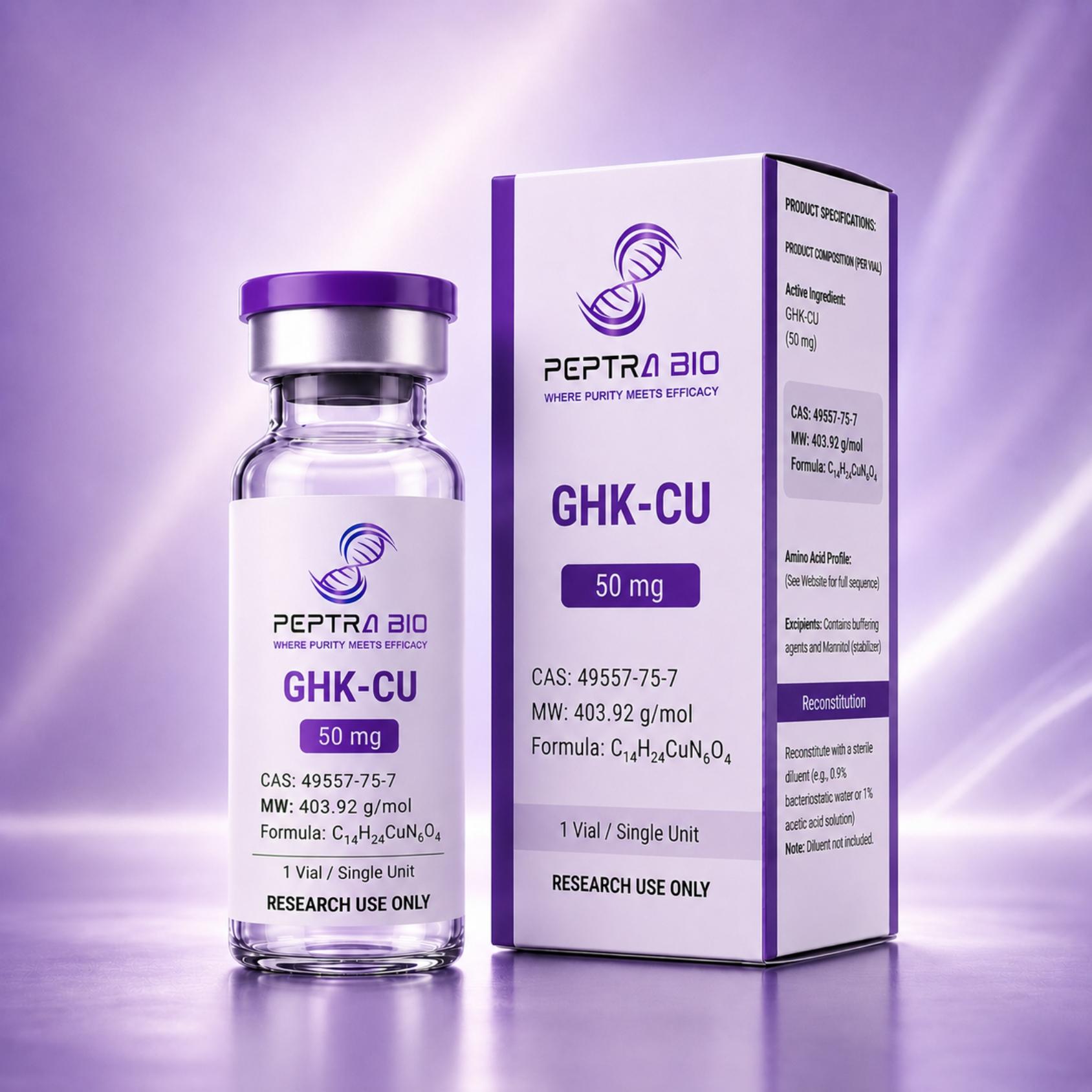
GHK-Cu (Glycyl-L-Histidyl-L-Lysine Copper) is a naturally occurring tripeptide with exceptional binding affinity for copper(II) ions.
- Molecular Weight: 403.93 g/mol (free base) / 340.38 g/mol (complexed)
- Sequence: Gly-His-Lys [Cu²⁺]
Biochemical Actions in Preclinical Models
- Gene Remodeling: Microarray studies indicate that GHK modulates over 4,000 human genes, upregulating antioxidant genes while downregulating pro-inflammatory markers (such as TGF-beta and TNF-alpha).
- Pro-Collagen & Elastin Synthesis: Stimulates dermal fibroblasts to produce Collagen Type I, Type III, and glycosaminoglycans (GAGs).
- MMP Regulation: Modulates Matrix Metalloproteinases (MMP-1, MMP-2) to ensure balanced tissue remodeling without excessive scar formation.
Epithalon (Epitalon): Telomerase & Epigenetics
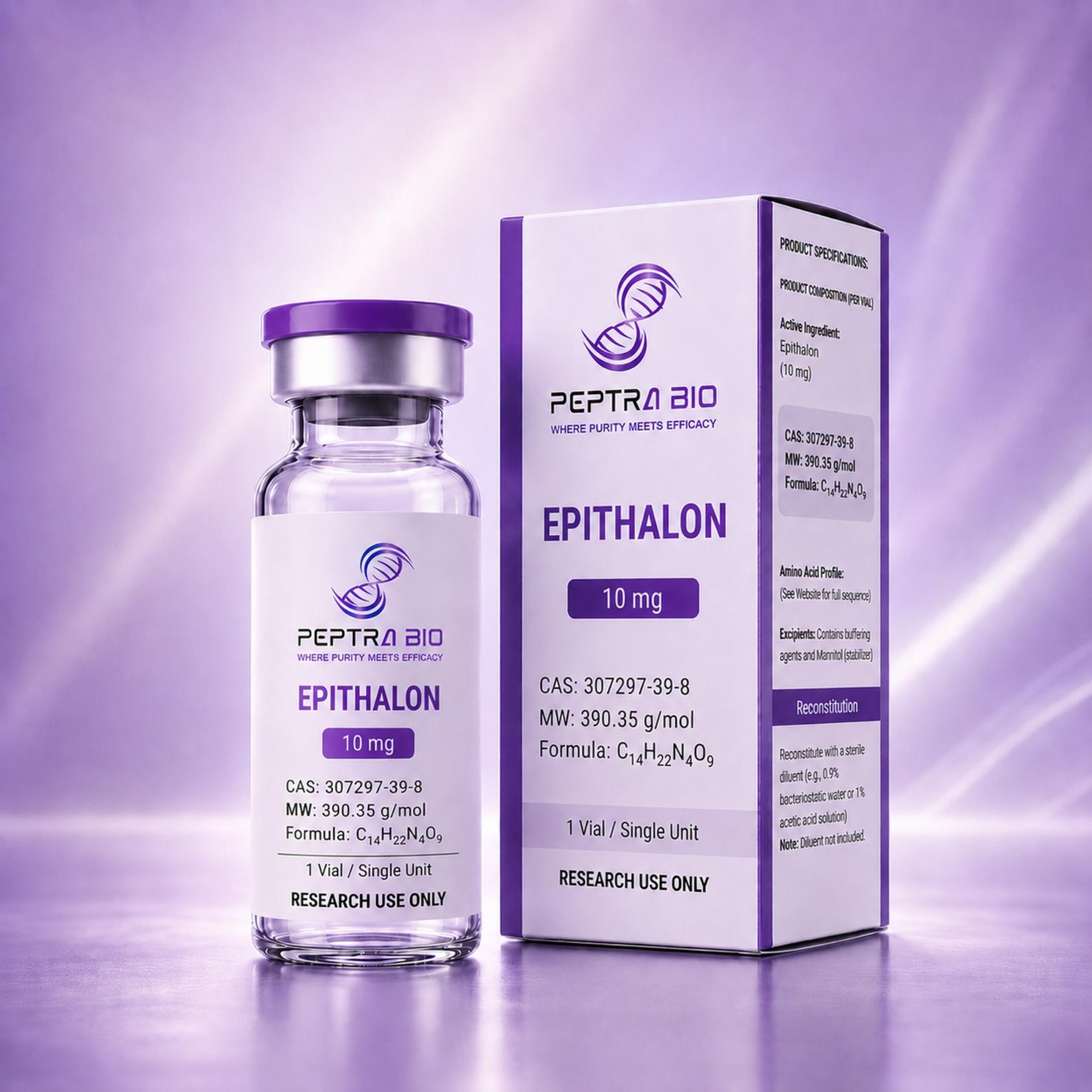
Epithalon (Ala-Glu-Asp-Gly) is a synthetic tetrapeptide modeled after Epithalamin, a peptide extract derived from the bovine pineal gland.
- Sequence: Ala-Glu-Asp-Gly (AEDG)
- Molecular Weight: 390.35 g/mol
Primary Research Mechanisms
- Telomerase Activation: Upregulates Telomerase Reverse Transcriptase (TERT) expression in human somatic cell models, facilitating telomere elongation and extending the Hayflick limit in vitro.
- Melatonin Synthesis: Enhances pineal melatonin production and restores circadian rhythm markers in aged rodent models.
- Chromatin Decondensation: Induces uncoiling of condensed heterochromatin, facilitating active ribosomal gene transcription.
Longevity & Regenerative Peptide Comparison
| Peptide Compound | Sequence Length | Key Molecular Target | Preclinical Research Observations |
|---|---|---|---|
| GHK-Cu | 3 Amino Acids (Tripeptide) | Copper-dependent ECM enzymes | Collagen I/III upregulation, wound healing, antioxidant |
| Epithalon | 4 Amino Acids (Tetrapeptide) | TERT Gene / Pineal melatonin | Telomere elongation, lifespan extension in animal assays |
| KPV | 3 Amino Acids (Tripeptide) | NF-κB inflammatory pathway | Mucosal anti-inflammatory, gut barrier stabilization |
| NAD+ / Precursors | Dinucleotide Coenzyme | Sirtuins (SIRT1/SIRT3), PARP | Mitochondrial ATP generation, DNA repair pathways |
Frequently Asked Questions (FAQ)
What is the biological function of copper in the GHK-Cu complex?
Copper(II) is a mandatory cofactor for enzymes like lysyl oxidase (which crosslinks collagen and elastin) and superoxide dismutase (SOD1), a primary cellular antioxidant defense enzyme.
How does Epithalon impact telomere length in research models?
Epithalon induces expression of the TERT (telomerase reverse transcriptase) gene, allowing the enzyme telomerase to add repetitive nucleotide sequences to the ends of chromosomes during cellular division.
Can GHK-Cu be reconstituted in standard bacteriostatic water?
Yes. GHK-Cu dissolves readily in bacteriostatic water or sterile saline, forming an intense, characteristic deep blue solution due to the copper coordination sphere.
What is the difference between Epithalamin and synthetic Epithalon?
Epithalamin was an animal-derived crude peptide extract from the bovine pineal gland. Epithalon is a 100% pure, synthetically manufactured tetrapeptide (AEDG) representing the precise active sequence.
Are these longevity peptides approved for clinical use?
No. GHK-Cu, Epithalon, and related bioregulators are investigational compounds intended strictly for laboratory in vitro and animal research.
Research Use Only Disclaimer
This research article is provided for educational and academic literature purposes only. Peptra Bio supplies peptides strictly for laboratory in vitro experimentation.
Key References
- Pickart L, Margolina A. Regenerative and protective actions of the GHK-Cu peptide in light of the new gene data. Int J Mol Sci. 2018;19(7):1987.
- Khavinson VK, et al. Peptides and aging. Neuro Endocrinol Lett. 2002;23(Suppl 3):11-14.
- Anisimov VN, et al. Epithalon decelerates aging and suppresses development of breast cancer in mice. Bull Exp Biol Med. 2002;134(2):173-176.
