
MOTS-c: Mitochondrial-Derived Peptide Signaling & Metabolic Research
Investigate MOTS-c, a 16-amino acid mitochondrial-encoded peptide regulating AMPK pathways, glucose homeostasis, and cellular energy expenditure.

Research Takeaway: MOTS-c (Mitochondrial Open Reading Frame of the 12S rRNA-c) is a 16-amino acid peptide encoded within the mitochondrial genome. It functions as an endocrine metabolic regulator by activating AMPK, stimulating GLUT4 glucose translocation, and restoring metabolic flexibility.
Executive Overview: The Mitochondrial Genome as a Signaling Hub
Historically, mitochondria were viewed solely as the energetic powerhouses of eukaryotic cells. In 2015, researchers discovered that the mitochondrial 12S ribosomal RNA gene encodes bioactive signaling peptides termed Mitochondrial-Derived Peptides (MDPs).
The most prominent MDP is MOTS-c, a 16-amino acid sequence that translocates to the nucleus under cellular stress to regulate nuclear gene expression and systemic metabolism.
Chemical Profile & Sequence
- Sequence: Met-Arg-Trp-Gln-Glu-Met-Gly-Tyr-Ile-Phe-Tyr-Pro-Arg-Lys-Leu-Arg (MRWQEMGYIFYPRKLR)
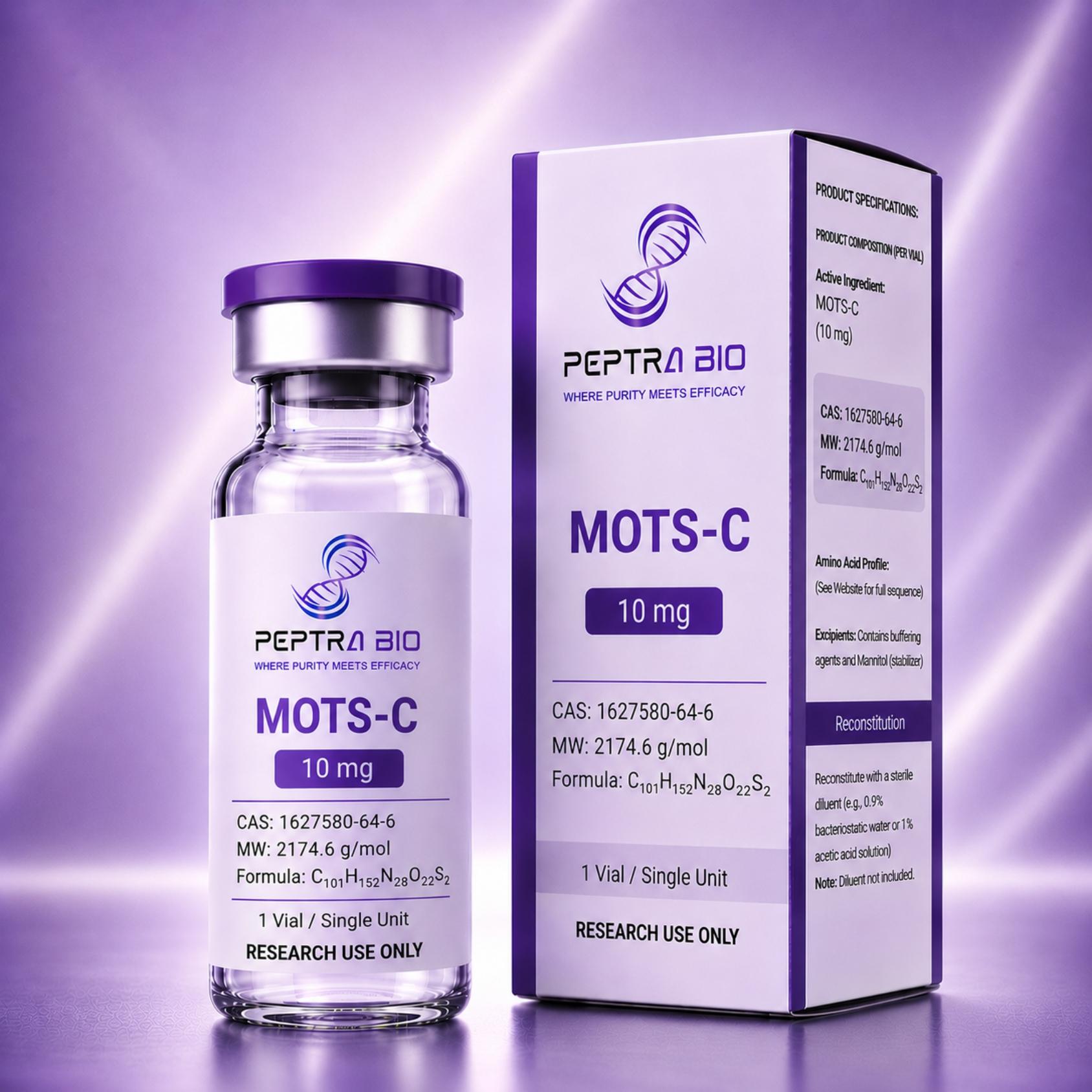
- Molecular Formula: C101H152N28O22S2
- Molecular Weight: 2174.62 g/mol
- Genomic Origin: Mitochondrial DNA (12S rRNA locus)
Key Intracellular Signaling Pathways
1. AMPK Activation & AICAR Accumulation
MOTS-c inhibits the folate-methionine cycle, resulting in the accumulation of AICAR (5-aminoimidazole-4-carboxamide ribonucleotide). Elevated AICAR levels directly phosphorylate and activate AMP-activated protein kinase (AMPK), the master metabolic switch of the cell.
2. Muscle Glucose Uptake & GLUT4 Translocation
In skeletal muscle cell assays, MOTS-c stimulates the translocation of GLUT4 glucose transporters to the cell membrane independently of insulin, enhancing glucose uptake and fatty acid oxidation.
3. Nuclear Translocation & Stress Adaptation
During metabolic stress (such as nutrient deprivation or intense oxidative stress), MOTS-c translocates into the cell nucleus, binding directly to antioxidant-response elements to promote cellular survival.
Preclinical Research Findings
| Experimental Model | Observed Biological Outcomes | Key Biomarkers |
|---|---|---|
| Diet-Induced Obesity (Rodents) | Prevention of insulin resistance, enhanced lipid clearance | Lower fasting insulin, improved HOMA-IR |
| Skeletal Muscle Performance | Increased running capacity, elevated mitochondrial biogenesis | PGC-1α upregulation, higher citrate synthase |
| Aging & Metabolic Flexibility | Maintenance of glucose clearance in aged mice | Normalized glucose tolerance curves |
Frequently Asked Questions (FAQ)
How was MOTS-c discovered?
MOTS-c was identified in 2015 by researchers at the University of Southern California (Lee et al.) who discovered short open reading frames (sORFs) within the mitochondrial 12S rRNA gene.
Why is MOTS-c called an "exercise mimetic"?
In preclinical studies, MOTS-c activates the same AMPK and PGC-1alpha metabolic cascades triggered by endurance exercise, improving physical capacity and skeletal muscle insulin sensitivity in mice.
How does MOTS-c stimulate glucose uptake without insulin?
MOTS-c activates the AMPK signaling pathway, which causes GLUT4 glucose transporter vesicles to fuse with the muscle cell membrane through an insulin-independent mechanism.
What are the stability requirements for MOTS-c?
MOTS-c contains methionine residues sensitive to oxidation. Lyophilized powder should be stored at -20°C in an airtight container. Reconstituted solutions should be stored at 2°C–8°C and protected from oxygen and light.
Is MOTS-c approved for treating diabetes or metabolic disease?
No. MOTS-c is an investigational compound used exclusively in laboratory and animal research.
Research Use Only Disclaimer
This article is prepared exclusively for scientific education and academic reference. Peptra Bio supplies peptides strictly for laboratory in vitro investigation.
Key References
- Lee C, et al. The mitochondrial-derived peptide MOTS-c promotes metabolic homeostasis and reduces obesity and insulin resistance. Cell Metab. 2015;21(3):443-454.
- Reynolds JC, et al. MOTS-c is an exercise-induced mitochondrial-encoded regulator of walking capacity and muscle homeostasis. Nat Commun. 2021;12(1):470.
- Kim KH, et al. Mitochondrial-derived peptides in aging and metabolic disease. Exp Mol Med. 2017;49(4):e317.
RELATED RESEARCH GUIDES
View All Articles →
CJC-1295 (No DAC): Molecular Profile & GHRH Pathway Analysis
Examine the modified tetrasubstituted 29-amino acid GHRH analog CJC-1295 without DAC, its pulsatile release kinetics, and half-life differentiation.

Ipamorelin 5mg Research Guide: Mechanism, Affinity & Laboratory Profiles
Explore the molecular pharmacology, GHSR-1a selectivity, endocrine stability, and handling protocols of the pentapeptide secretagogue Ipamorelin.
Selank Heptapeptide: Molecular Structure & Receptor Modulation Guide
Examine the regulatory heptapeptide Selank, its tuftsin-derived sequence, allosteric GABA-A modulation, and preclinical neuroprotective properties.